
Mind Over Match: The Brain’s Role in Elite Hand-Eye Coordination
- Brain Fitness, Brain Health, BrainTap App, Deep Relaxation, Mindfulness and Meditation
Share this post on social media
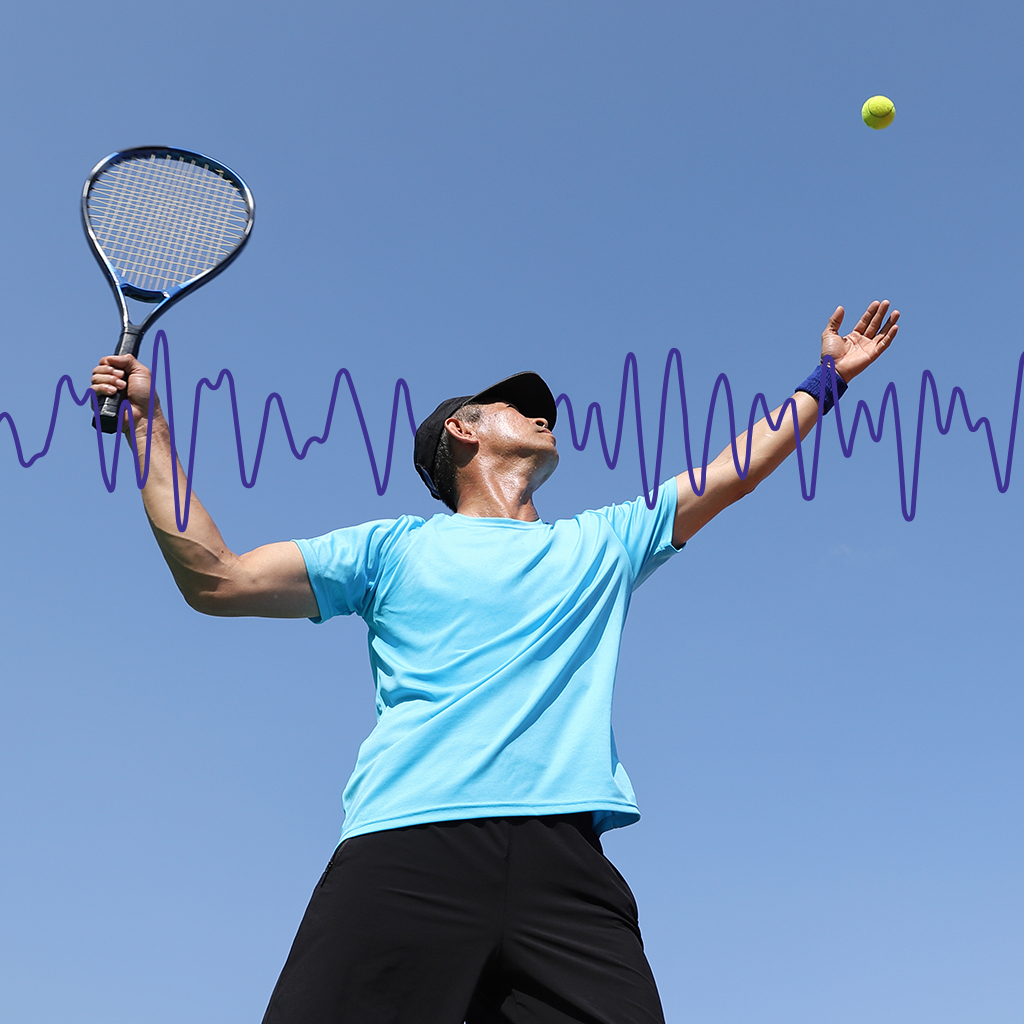
As the tennis world turns its gaze toward the final Grand Slam of the year – the US Open – fans and analysts alike wonder: What gives players like Novak Djokovic the edge in high-stakes matches? It’s not just powerful serves, tireless footwork, or precise forehands. It’s something more elusive and profound: the mind.
Djokovic, known not only for his near-perfect technique but also for his unshakeable composure, is a master of mental toughness. His on-court behavior – calm under pressure, focused point by point—is a case study in elite-level mental preparation and hand-eye coordination. These abilities aren’t just natural gifts, they’re skills, and they can be trained for, learnt, refined, and optimized.
That’s where tools like BrainTap which promotes brain fitness come in—a neuroscience-backed system that helps athletes train their brains for improved focus, faster reaction times, and better cognitive resilience.
At its core, hand-eye coordination is the ability to process visual information and translate it into physical action. In tennis, that means seeing a serve and responding in milliseconds with a well-calculated return. It’s not magic—it’s neuroscience.
This coordination depends heavily on vision, the dominant sensory input in our brain’s information system. About 30% of the brain is directly involved in processing vision, but when complex motor actions are involved – like returning a serve or making a quick adjustment mid-rally – as much as 85% of the brain gets recruited to the task.
Elite hand-eye coordination isn’t just about seeing a ball and hitting it. It involves:
This complex symphony of skills must be trained and synchronized. The nervous system, visual system, and muscular system all work in harmony and training your brain is key to keeping this harmony in tune.
At the elite level, mental performance separates the good from the great. Djokovic has repeatedly demonstrated the ability to rise under pressure – winning Grand Slam matches after being two sets down, blocking out raucous crowds, and resetting after double faults or bad calls.
What’s his secret? Djokovic is an advocate of mental resilience, mindfulness, brain training and mental clarity – all components of BrainTap’s neuro-enhancement and brain training device. BrainTap helps athletes stimulate brainwave entrainment activity using light, sound, and positive guided meditation. This fosters calm, focus, and optimized brain performance – exactly what elite tennis demands.
At BrainTap, the approach to improving hand-eye coordination and mental resilience is holistic. It incorporates:
Athletes visualize themselves executing precise shots and winning key points. This primes the neural pathways needed to reproduce those actions in real-time.
Breathing exercises regulate the nervous system, helping players like Djokovic stay calm during long, tense matches.
By staying present-focused, players minimize distractions from past mistakes or future fears. BrainTap’s guided meditations simulate these states to train consistency.
Rather than focusing on the overall match result, BrainTap helps athletes adopt a point-by-point mindset – a Djokovic trademark – setting short-term, achievable goals that build confidence.
Through visual and auditory stimulation, BrainTap sessions sharpen an athlete’s ability to process cues quickly – improving reflexes and visual memory.
Post-match sessions promote deep relaxation, facilitating recovery and mental reset, which is critical during tournaments like the US Open where matches occur every 48 hours.
Unlike team sports, tennis players stand alone on the court. No coach shouting advice mid-match. No teammates to rally around. Every serve, every miss, every decision – it’s all on the individual player. The mental burden is immense.
This isolation magnifies stress and demands elite-level cognitive control. BrainTap’s structured programs guide athletes to build mental resilience and recover faster from setbacks, allowing them to adapt and perform consistently at their peak.
Tennis has evolved. Today’s top players are faster, stronger, and more technical. But the real battleground lies between the ears. The 2025 US Open will likely showcase players whose mental training regimens rival their physical ones.
Players like Novak Djokovic embody this evolution. At 38, he continues to dominate not because of raw athleticism alone – but because he trains his mind like a muscle. BrainTap provides the next generation of athletes with tools to do the same.
The path to becoming an elite tennis player doesn’t just run through the gym or the practice court—it runs through the brain. From mental imagery and reflex optimization to stress management and recovery, the brain is the command center of hand-eye coordination.
In a sport where milliseconds and millimetres determine victory, technologies like BrainTap offer a scientifically grounded edge—helping athletes see clearer, move faster, and think sharper.
As the US Open looms, remember this: It’s not just the racket or the serve that wins titles—it’s the brain behind it. Just ask Novak Djokovic.
Train your brain. Win the point. Own the match.
Mind over match—because peak performance starts from within.
To become mentally strong and resilient you can start your journey with our 14-Day Free Trial
Reference:
Elevate your mind: Subscribe to our newsletter for insights on brain health, cutting-edge research updates, and personalized session suggestions to help you unleash your ultimate potential!
We only send what matters—no spam, no sharing. We promise.