
Elevating Your Mind: The Importance of Brain Fitness with BrainTap
- Brain Fitness, Brain Health, BrainTap App, BrainTap Technology, Health and Wellness, Technology, The BrainTap Headset
Share this post on social media
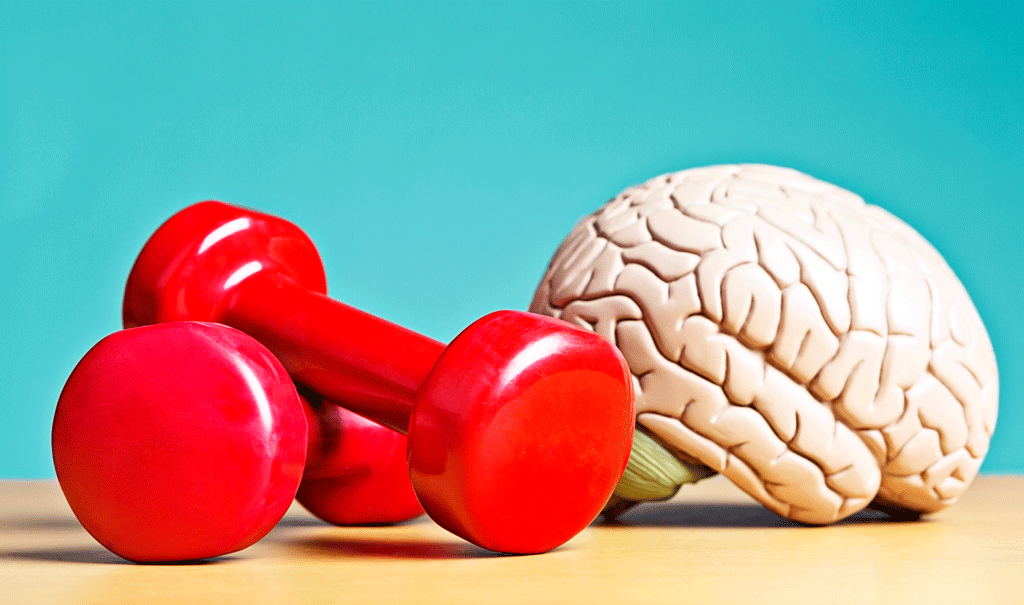
In much the same way that physical fitness has become essential for overall health, brain fitness is now recognized as crucial for mental well-being. Recent advancements in research on brain structure, function, and organization underscore the importance of brain fitness, which impacts key areas such as learning, memory, plasticity, and how we interact with our environment.
Brain fitness can be defined as the brain’s ability to learn and adapt in a rapidly changing world. As society continues to evolve—shifting from local to global perspectives and embracing the free flow of information—our brains must develop new neural circuits to keep pace. This concept has gained prominence in the 21st century, an era marked by significant inter-generational knowledge gaps and rapid technological advancements. Fostering an environment that promotes lifelong learning is crucial for maintaining brain fitness and ensuring our ability to adapt to the ever-changing world around us.
The foundation of brain fitness lies in understanding that the human brain can be trained or rehabilitated by manipulating stimuli and environmental factors—a process known as brain plasticity. This continuous learning and adaptation process shapes brain fitness, creating a cycle that enhances our ability to learn and thrive throughout our lives.
Brain fitness is integral to performing daily tasks efficiently, whether you’re remembering a grocery list, planning your day, or driving safely. These tasks rely on cognitive skills, which are higher-order thinking processes essential for reasoning, attention, learning, and memory. Maintaining brain fitness can help you perform these tasks more effectively. Some key cognitive abilities influenced by brain fitness include:
Despite having adequate intelligence, instruction, and practice, some individuals struggle with learning due to cognitive differences. For example, individuals with dyslexia may find reading challenging, while those with dysgraphia may struggle with writing. However, many of these individuals develop remarkable compensatory abilities, using environmental resources to overcome learning challenges.
The brain’s ability to compensate is closely linked to cognitive health and brain fitness. By employing multiple learning styles and problem-solving strategies, the brain can adjust and enhance its skills, even when faced with obstacles. This adaptability is a testament to the brain’s resilience and its capacity to grow and improve throughout life
As the importance of brain fitness becomes more widely recognized, there is an increasing focus on maintaining mental sharpness and cognitive health. Cognitive abilities such as memory, attention, and hand-eye coordination naturally decline over time, but maintaining brain fitness can help slow this process and keep the mind agile.
Just as we track our physical health, monitoring cognitive health and brain fitness is equally important. Self-reported methods, such as remembering a list of items or completing crossword puzzles, can provide some insight into cognitive abilities, but they may lack accuracy. For a more reliable assessment, standardized cognitive tests based on neuropsychological research offer a more precise measure of cognitive function over time. These assessments can help individuals track their brain fitness and identify areas where improvement is needed.
By incorporating practices that promote brain fitness into our daily lives, we can enhance cognitive health, support lifelong learning, and maintain mental agility.
At BrainTap, we believe in unlocking the limitless potential within every individual, no matter where they are in life. By harnessing the transformative power of brain fitness, we empower everyone—regardless of age, background, or personal circumstances—to fully access and maximize their brain health. This belief drives our mission and the development of our innovative products.
Our cutting-edge headset, designed to work seamlessly with an extensive library of over 2,000 guided audio programs, is more than just a tool—it’s a gateway to enhanced mental clarity, heightened confidence, and renewed energy. Through a unique combination of sound, light, and guided visualization, BrainTap’s system promotes deep relaxation and focus, helping individuals unlock their mind’s true potential.
We aim to impact a diverse range of people—from visionary entrepreneurs shaping the future to dedicated students pursuing academic excellence, from supportive parents balancing the demands of family life to elite athletes striving for peak performance. No matter who you are or what your goals may be, BrainTap is designed to support and elevate your journey.
With BrainTap, you’re not just training your brain—you’re preparing yourself for a future where your possibilities are truly limitless. Start your free 14-day trial now and discover the power of brain fitness.
Elevate your mind: Subscribe to our newsletter for insights on brain health, cutting-edge research updates, and personalized session suggestions to help you unleash your ultimate potential!
We only send what matters—no spam, no sharing. We promise.