How Much Deep, Light, and REM Sleep Does a Person Need?
- Brain Health, BrainTap App, Health and Wellness, Sleep
Share this post on social media

Sleep is a complex process crucial to overall health and well-being. It’s more than just closing your eyes and drifting off—it’s an active state where the brain and body perform various restorative tasks. While the full purpose of sleep remains a subject of ongoing study, there are several prominent theories that explain its importance. These include the Inactivity theory, Energy Conservation theory, Restoration theory, and Brain Plasticity theory, each offering insights into why sleep is essential for both mind and body.
One of the widely accepted concepts, the Inactivity theory, proposes that sleep evolved as a survival mechanism, keeping us safe during periods of vulnerability. Meanwhile, the Energy Conservation theory highlights how sleep reduces energy demands, giving the body a chance to recharge. The Restoration theory suggests that sleep allows the body to repair tissues and release critical hormones that contribute to physical recovery. Lastly, the Brain Plasticity theory explains how sleep enhances cognitive functions like learning, memory, and problem-solving by promoting brain flexibility and adaptation.
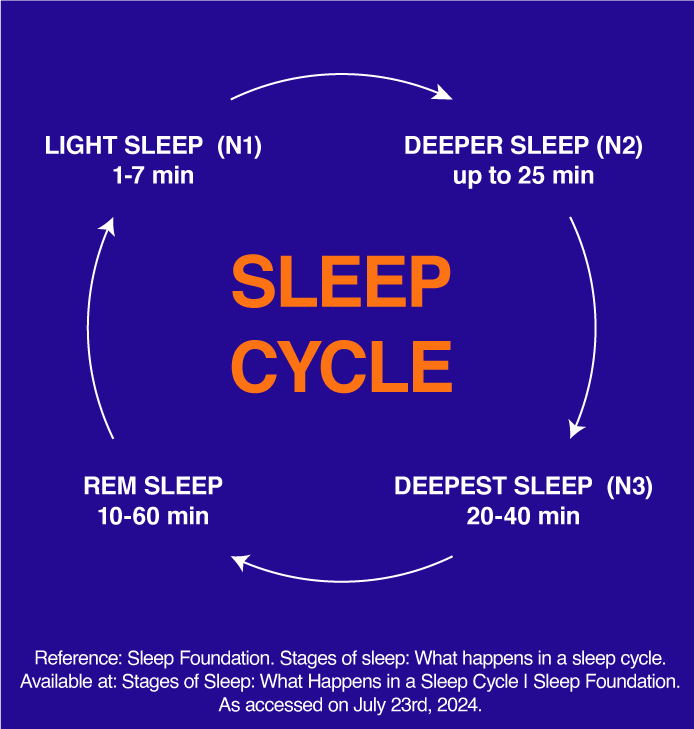
The sleep process is divided into two primary phases: Rapid Eye Movement (REM) and Non-Rapid Eye Movement (NREM) sleep. NREM sleep is further subdivided into three stages—N1, N2, and N3—while REM sleep is known for its association with dreaming. Each night, the body cycles through these stages about four to six times, with each cycle lasting around 90 minutes. Every stage of sleep contributes to different aspects of rest, each defined by unique brain activity patterns, muscle tone, and eye movement.
NREM Sleep: Comprising about 75% to 80% of your total sleep, NREM sleep is the foundation of restorative rest. Here are its stages:
REM Sleep: The final phase of each sleep cycle, REM sleep accounts for 20% to 25% of total sleep. This is where the brain becomes highly active, dreams occur, and emotional processing and memory consolidation take place.
A typical sleep cycle begins with a brief period of N1 sleep, then moves into N2 and N3, and eventually REM sleep. This cycle repeats several times throughout the night, with each phase shifting in duration. Early in the night, N3 deep sleep dominates, while later cycles are marked by longer periods of REM sleep. Each complete cycle lasts between 70 to 120 minutes, contributing to around four to five total cycles in a night.
The balance between deep and REM sleep is essential for feeling refreshed. Deep sleep is crucial for physical recovery, while REM sleep supports emotional and mental recovery. Without completing these cycles, the brain and body can’t fully benefit from sleep’s restorative functions.
Deep sleep, also known as N3 sleep, plays a pivotal role in physical recovery. During this phase, your body undergoes processes like muscle relaxation, increased blood flow to muscles, slowed heart rate, and the release of hormones like growth hormone. These functions are critical for tissue repair and energy restoration. Deep sleep is especially important for people with active lifestyles, helping them to recover from physical exertion.
In healthy adults, deep sleep accounts for approximately 25% of total sleep, or about 105 to 120 minutes in a typical night of 7 to 8 hours of sleep. However, as we age, the amount of time spent in deep sleep naturally decreases, with more time spent in lighter stages, particularly N2. This shift is a normal part of the aging process, but deep sleep remains important for overall well-being.
REM sleep, often associated with dreaming, typically makes up about 20% to 25% of total sleep time. While the exact amount of REM sleep needed can vary, this stage is thought to play a key role in processing emotions, storing memories, and supporting cognitive function. People who are deprived of REM sleep may experience difficulties with mood regulation, concentration, and memory recall. Therefore, achieving sufficient REM sleep is essential for emotional balance and mental clarity.
While deep and REM sleep often take the spotlight, light sleep (N1 and N2) is essential for transitioning between the deeper stages of rest. It acts as a bridge, allowing the body to cycle through each stage effectively. Although light sleep isn’t the primary contributor to physical or mental recovery, it’s impossible to experience a full sleep cycle without it. This makes light sleep an indispensable part of your overall sleep health.
Many approaches to improving sleep focus on creating an environment conducive to rest—such as maintaining a consistent sleep routine or reducing screen time before bed. While these strategies may require discipline, BrainTap offers an innovative, non-invasive way to promote deeper relaxation. By using a blend of light and sound therapy, BrainTap gently guides your brain into states that support rest and recovery. This helps users experience a more restful night’s sleep without major lifestyle adjustments.
BrainTap’s unique approach works with your brain’s natural rhythms to encourage relaxation and improve sleep quality. Through the synchronization of brainwave frequencies, BrainTap makes it easier to wind down, fall asleep, and wake up feeling refreshed. By helping the brain achieve a state conducive to restorative rest, BrainTap supports both mental clarity and physical recovery in a natural, sustainable way.
Start your journey toward better sleep with BrainTap and experience the difference. Try our 14-day free trial today.
Elevate your mind: Subscribe to our newsletter for insights on brain health, cutting-edge research updates, and personalized session suggestions to help you unleash your ultimate potential!
We only send what matters—no spam, no sharing. We promise.